We use cookies to ensure our site functions properly and to store limited information about your usage. You may give or withdraw consent at any time. To find out more, read our privacy policy and cookie policy.
Manage Cookies
A cookie is information stored on your computer by a website you visit. Cookies often store your settings for a website, such as your preferred language or location. This allows the site to present you with information customized to fit your needs. As per the GDPR law, companies need to get your explicit approval to collect your data. Some of these cookies are ‘strictly necessary’ to provide the basic functions of the website and can not be turned off, while others if present, have the option of being turned off. Learn more about our Privacy and Cookie policies. These can be managed also from our cookie policy page.
Strictly necessary cookies(always on):
Necessary for enabling core functionality. The website cannot function properly without these cookies. This cannot be turned off. e.g. Sign in, Language
Analytics cookies:
Analytical cookies help us to analyse user behaviour, mainly to see if the users are able to find and act on things that they are looking for. They allow us to recognise and count the number of visitors and to see how visitors move around our website when they are using it. Tools used: Google Analytics
Share Head Start Pathway Simplifying Local Government on FacebookShare Head Start Pathway Simplifying Local Government on X (formerly Twitter)Share Head Start Pathway Simplifying Local Government on LinkedinEmail Head Start Pathway Simplifying Local Government link
How Hauraki District is governed matters to all of us
The roads that connect our rural communities, the water that comes out of our taps, the libraries and pools our families use, the plans that shape what gets built in our towns, are public structures that are built over generations. They belong to all of us, and how they're planned, funded, and managed depends on how local government is organised.
Centralgovernment has asked councils to put forward their own preferred shape for a local government by 9 August 2026. Councils that choose to submit a proposal can shapeContinue reading
How Hauraki District is governed matters to all of us
The roads that connect our rural communities, the water that comes out of our taps, the libraries and pools our families use, the plans that shape what gets built in our towns, are public structures that are built over generations. They belong to all of us, and how they're planned, funded, and managed depends on how local government is organised.
Centralgovernment has asked councils to put forward their own preferred shape for a local government by 9 August 2026. Councils that choose to submit a proposal can shape how that change happens. We want to hear from our community before we decide what to put forward. Councils that don't put forward a proposal will be part of a re-organisation that will be determined by Central Government instead.
What you value matters
For over 35-years, this community has shaped what local government does here. You’ve told us that having a say in local decisions is important to you and so is supporting the local economy and our people. We know you love the great outdoors and want to protect our natural taonga (treasures). We’re grass roots; we value our sports fields and community facilities, and we want to protect our unique culture and heritage. We know that keeping rates affordable matters to everyone.Whatever form local government takes in the future, we want our community to continue having a say in the things that matter to them.
What we know
Central government has signalled that regional councils will be replaced after 2028, and that it wants fewer city and district councils across New Zealand. Councils have a short window to put forward their own preferred proposal before those decisions are made for them.
What we don't know
The financial implications of each scenario remain unclear at this stage. We can't give you firm numbers yet. They will be worked through on any preferred proposal.
The future shape of local government will ultimately bedetermined by central government. Our job is to make sure the voice of the Hauraki district is clearly heard before those decisions are made.
Some scenarios
We’ve listed what we believe are the three most viablescenarios for a future Local Government Organisation below. We’ve also noted the high-level pros and cons of each based on the Government’s criteria. If we have a preferred scenario for a future structure, we need to submit this in a ‘Head Start’ proposal to the Government by 9 August this year.
Your feedback will help us decide whether we put forward a preferred scenario to government.
Central government will ultimately decide the future shape of local government - but we want to make sure central government hears clearly fromthe people of the Hauraki district before those decisions are made.
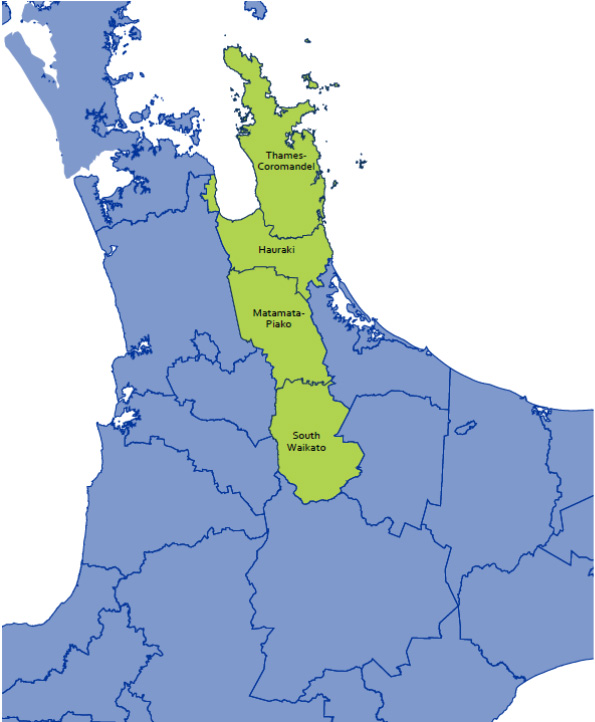
Under this scenario, Hauraki District would merge with Matamata-Piako, South Waikato, and Thames-Coromandel Districts.
Potential Opportunities
One Council would replace two separate layers of local government, and four Territorial Authoritiespotentially making decisions simpler and clearer. The boundaries largelyfollow the Waihou,Piako, Waitakaruru,Kauaeranga River and various Coromandel Rangecatchments,so rivercatchments can be planned for and managed together. The combined populationis large enough to benefit from economies of scale. We already work closely with these councils to deliver various services.
We all identify as part of the Waikato Region.
The Council can focus on rural and provincial matters.
A Council at this scale can support the economies of the towns.
Potential Challenges
We will need to ensure governance arrangements give local communities a real voice. It will be easier at this scale than a Waikato-wide option.
It’s a long drive from one end of this sub-region to the other. We will need to enable elected members to still participate fairly in council meetings etc.
Scenario2:A provincial unitary authority
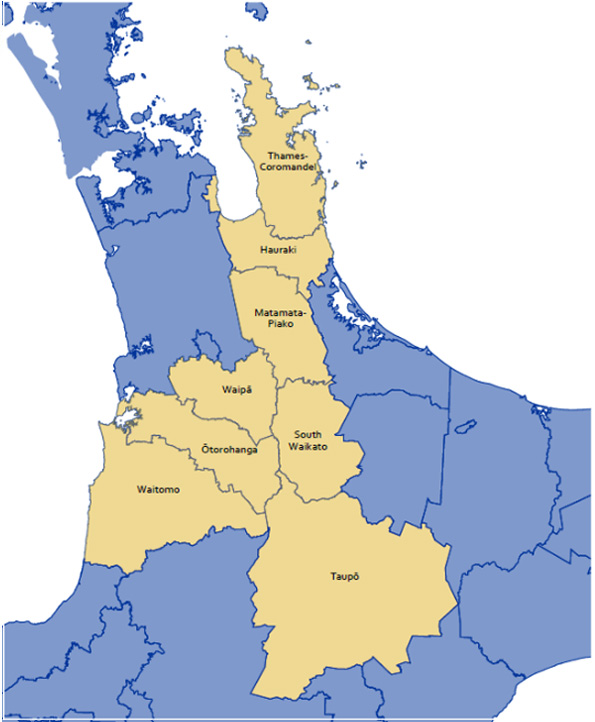
Under this scenario Hauraki District would merge with the Matamata-Piako, South Waikato, Thames-Coromandel, Taupō, Waipā, Ōtorohanga and Waitomo Districts. It would not include Hamilton City or Waikato District.
Potential Opportunities
One council would replace two separate layers of local government and eight Territorial Authorities, potentially, making decisions simpler and clearer.
Provincial interests can remain a focus, though Waipā faces significantly more growth pressures than the other areas.
A larger combined area could deliver economies of scale, though we can’t providefinancial analysis at this stage.
We share a water services entity with most of these districts.
Potential Challenges
A wider geographic area and larger population may make it harder for local communities to have a real voice in decisions.
The boundaries don’t follow the Waikato River catchments.
Waipā is in an existing sub-regionalgrowth planning partnership with Hamiton City and Waikato District.
Centralising workforcescould reduce economic activity in our rural towns.
It’s a long drive from one end of this sub-region to the other. We will need to enable elected members to still participate fairly in council meetings etc.
The new proposed planning system, which centres on a regional spatial plan will require cross-collaboration.
Scenario3: A Waikato wide unitary authority
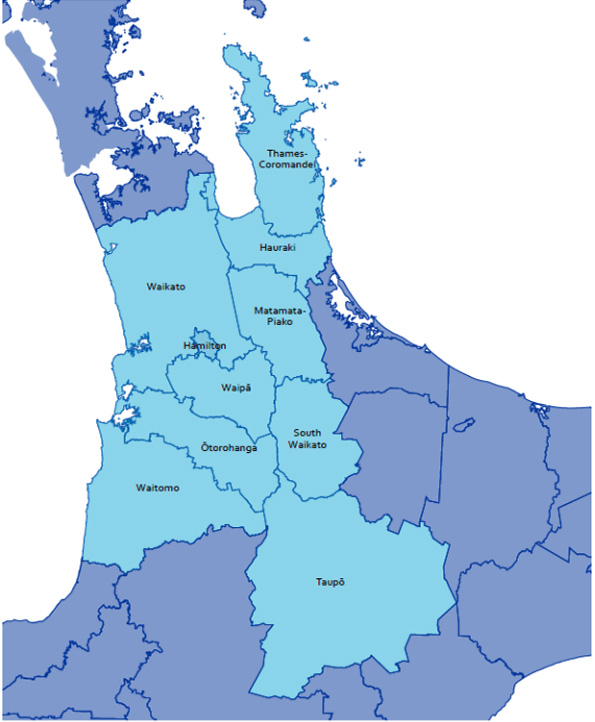
Under this option, all Councils in the Waikato region would form a single unitary authority delivering both local and regional functions. It would include Hauraki District merging with the Matamata-Piako, South Waikato, Thames-Coromandel, Taupō, Waipā, Ōtorohanga, Waitomo and Waikato Districts, and Hamilton City.
Potential Opportunities
One council would replace two separate layers of local government and ten Territorial Authorities, potentially simplifying how decisions get made.
Planning across the whole region could improve efficiency and support regional shared services, though we can’t provide any financial analysis at this stage.
The structure supports the new proposed planning system, which centres on a regional spatial plan.
Potential Challenges
With such a large population and geographic area, giving local communities a real voice in decisions will be harder.
Decisions may become less responsive to local issues and priorities.
The areacovers many river catchments and partners to engage with.
City priorities and challenges can be very different from those facing provincial and rural challenges.
The boundaries don’t align with the existing geographic boundaries of the joint Waikato Waters Limited.
Centralising workforces could reduce economic activity in our rural towns.
It’s a long drive from one end of this sub-region to the other. We will need to enable elected members to still participate fairly in council meetings etc.
Option 4: Do nothing
There is also the option to do nothing, however central government will then likely tell us to merge with at least one other council as we do not have a big enough population to affordably deliver both local and regional council functions.We would rather front foot the conversation by telling Government our preferred proposal for merging with others.
Share Local Government is Changing on FacebookShare Local Government is Changing on X (formerly Twitter)Share Local Government is Changing on LinkedinEmail Local Government is Changing link
Simplifying local government, starting from strength
Proposal for a unitary authority aligned with the connected communities and catchments of Waihou, Piako and Coromandel
Hauraki, Matamata-Piako and Thames-Coromandel district councils have submitted a proposal for a new unitary authority for the Waihou-Piako-Hauraki-Coromandel area.
Simplifying local government, starting from strength
Proposal for a unitary authority aligned with the connected communities and catchments of Waihou, Piako and Coromandel
Hauraki, Matamata-Piako and Thames-Coromandel district councils have submitted a proposal for a new unitary authority for the Waihou-Piako-Hauraki-Coromandel area.